This is a very informative guide on handling a vehicle breakdown on the road. It covers everything from initial actions for safety to preventive measures, ensuring that drivers are well-prepared. Here’s a quick overview of the key steps:
Key Steps When Your Vehicle Breaks Down:
Stay Calm: Panicking can make the situation worse. Take a moment to assess your surroundings and ensure the safety of yourself and your passengers.
Move Your Vehicle Off the Road: Ensure you’re out of the way of other traffic, ideally by pulling over to the left side if you’re in a country that drives on the right.
Turn On Hazard Lights: This makes your vehicle more visible to other drivers, especially at night or during low visibility conditions.
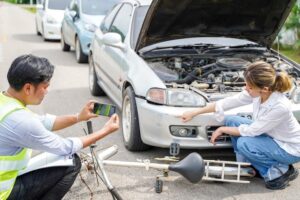
Wear Light-Coloured Clothes: This makes you more visible, especially at night or in low-light conditions.
Place a Warning Triangle (If Safe): If it’s safe to do so, place a triangle behind your vehicle to alert other drivers.
Contact Breakdown Service: If you have breakdown cover, call your provider for assistance. If not, consider contacting an emergency roadside service.
Passenger Safety:Have all passengers exit the vehicle from the left-hand side, away from traffic.
What to Do If You Need Assistance:
- With Breakdown Cover: Contact your provider immediately for assistance.
- Without Breakdown Cover: Consider arranging breakdown cover while you’re still safely at the roadside. Alternatively, use available emergency phone services.
Essential Items to Keep in Your Vehicle:
- Communication Devices: Mobile phone and charger.
- Tyre Equipment: Including a spare tyre, jack, and tools.
- Visibility Tools: Reflective jacket, torch, and warning triangle.
- Seasonal Items: Sunglasses, de-icer, shovel, and screen wash.
- First Aid Kit: Always have a stocked first aid kit in your vehicle.
- Comfort Items: Water, snacks, and a waterproof jacket.
Staying Safe:
- On the Motorway: Exit the vehicle and move behind a safety barrier.
- Busy Roads or Dangerous Areas: If your car breaks down in a hazardous location, move away from the vehicle and wait in a safe spot.
- Town Centre or Low-Risk Areas: It’s okay to stay in the vehicle if you’re in a well-lit, safe area.
The Importance of Breakdown Cover:
Breakdown cover provides peace of mind, ensuring you aren’t stranded without assistance. Even if you don’t have it at the moment, you can typically purchase it, but it’s always better to have coverage ahead of time. It helps cover repairs and ensures you aren’t left with an expensive towing bill.
Having breakdown cover can save you from a lot of stress and costly situations, providing support in both emergency repairs and transportation back on the road.
Would you like more information on how to find or choose the right breakdown cover for your needs?